How to Relieve Everyday Head and Eye Tension: Practical Ways to Relax and Recharge
Between hours in front of screens, busy schedules, commuting, and everyday responsibilities, it is easy for tension to build up around the head, eyes, neck, and shoulders.
Recent Blogs
- Halloween Jackets: How to Choose the Right Horror Jacket for an Easy, Standout Costume
- How to Find the Colors That Truly Suit You With Personal Color Analysis
- Best Walking Shoes for Nurses: Stylish Comfort for Long Hospital Shifts
- How to Choose the Best Roof Top Tents in 2026
- How to Choose Women's Handbags That Are Stylish, Practical, and Built to Last
- Trendy Men’s Workwear Essentials That Won’t Break the Bank
- How to Choose the Best Men's Wallets for Style, Comfort, and Everyday Use
September 26 18
Do you ever finish a long day with a tight-feeling head, tired eyes, and the sense that you simply cannot switch off? Between hours in front of screens, busy schedules, commuting, and everyday responsibilities, it is easy for tension to build up around the head, eyes, neck, and shoulders.
The good news is that you do not always need to completely change your routine to feel more comfortable. Small habits, regular breaks, relaxation techniques, and the right wellness tools can make it easier to create moments of relaxation throughout the day.
If you regularly experience everyday head and eye fatigue, understanding what causes it is the first step toward finding a practical solution.
Common Reasons Your Head and Eyes Feel Tired
Modern lifestyles put considerable demands on our eyes and attention. If you work at a computer, spend hours on your phone, or frequently switch between different screens, your eyes may feel tired by the end of the day.
Common signs of everyday eye and head fatigue can include:
- Tired or strained-feeling eyes
- Difficulty relaxing after screen-heavy work
- Tension around the forehead or temples
- A stiff or uncomfortable neck
- Feeling mentally drained after concentrating for hours
- Trouble creating a relaxing bedtime routine
These problems can be especially noticeable when work and personal life both involve screens. Even when you take care of your basic needs, it can be difficult to find enough time for meaningful relaxation.
Why Screen Time Can Contribute to Discomfort
One reason your eyes may feel tired is simply the amount of visual concentration required when using digital devices. People also tend to blink less frequently while concentrating on screens, which can contribute to dry or tired-feeling eyes.
Your environment can make things worse. Glare, poor lighting, an uncomfortable viewing position, and extended periods without breaks may all contribute to visual fatigue.
Meanwhile, concentrating for long periods can leave the muscles around your face and head feeling tense. Add a busy schedule and limited downtime, and relaxation can easily become something you postpone until the end of the day.
The solution is not necessarily to eliminate technology. Instead, the goal is to create healthier breaks and give yourself opportunities to relax.
Practical Ways to Relax Your Head and Eyes
1. Take Regular Screen Breaks
One of the simplest strategies is to avoid staring at a screen continuously for long periods. Every so often, look away from your monitor or phone and focus on something farther away.
Even a short pause can give your eyes a welcome change from close-up screen work.
2. Adjust Your Workspace
Your workstation can have a surprising impact on how comfortable you feel. Make sure your screen is positioned comfortably, reduce unnecessary glare, and use lighting that does not force you to squint.
A comfortable chair and sensible screen height can also help you avoid unnecessary neck and shoulder tension.
3. Give Yourself a Few Minutes of Quiet
Relaxation does not always require a lengthy wellness routine. Five or ten minutes away from notifications, emails, and social media can help you mentally transition from work mode to personal time.
Try sitting somewhere comfortable, closing your eyes, and taking slow, relaxed breaths.
4. Try Gentle Massage
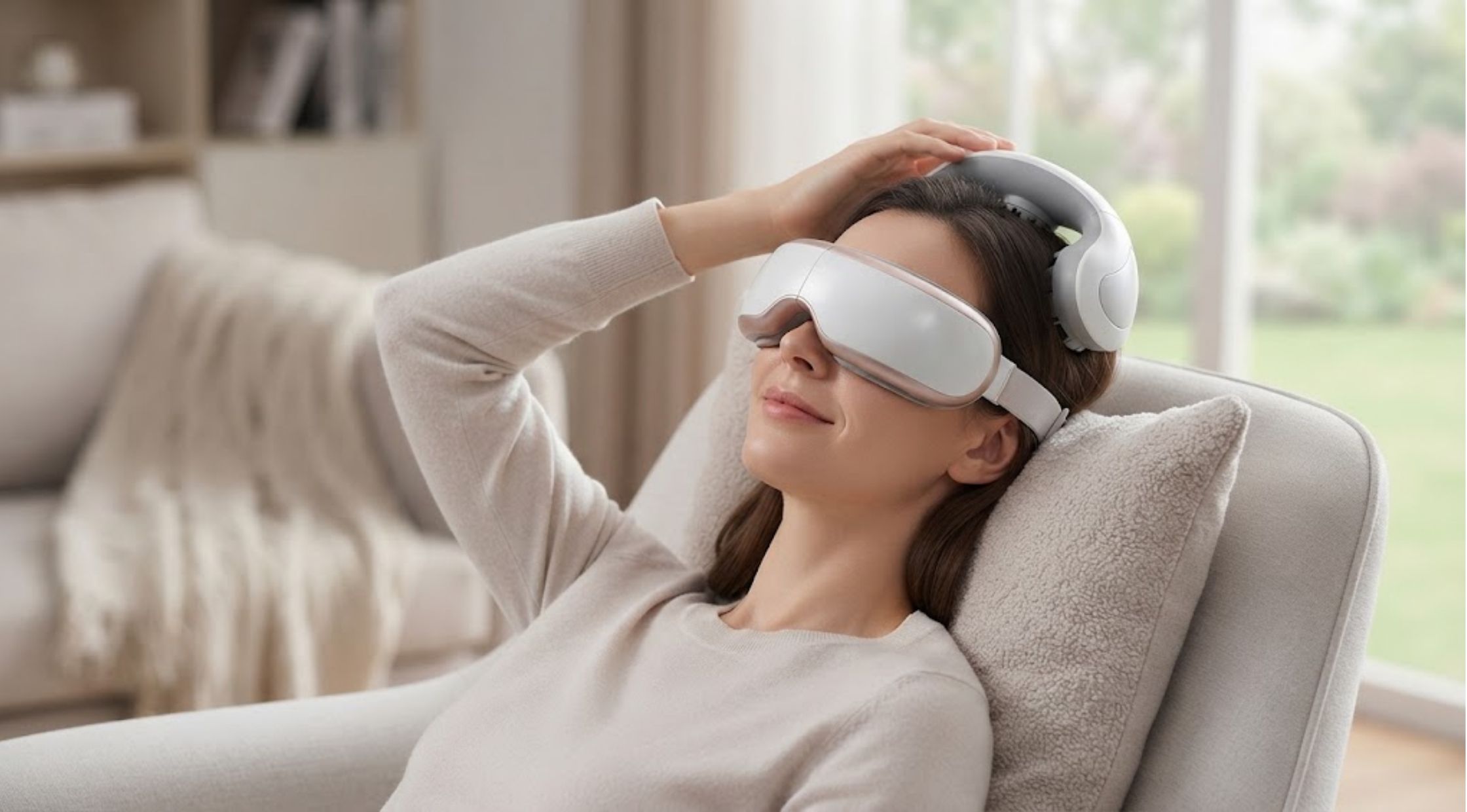
Massage can be another useful part of a relaxation routine. Rather than relying entirely on manual massage, a Head Massager can provide a convenient way to incorporate soothing stimulation into your downtime.
The advantage is convenience. You can use a Head Massager at home while reading, listening to music, or preparing for bed, depending on the device and its intended use.
For people who spend most of their day concentrating, having a dedicated relaxation tool can make it easier to actually follow through with a self-care routine.
When an Eye Massager May Be Worth Considering
If your biggest issue is tiredness around the eyes, an Eye Massager may be another option to explore
An Eye Massager is designed specifically for the eye area and may combine features such as massage, gentle pressure, warmth, or other relaxation-focused functions, depending on the model.
This can be particularly appealing after a long day of computer work or when you want to establish a calming evening routine.
However, a wellness device should complement not replace basic habits such as taking screen breaks, getting adequate rest, and maintaining a comfortable working environment.
Choosing a Better Relaxation Device
With so many wellness gadgets available, it can be difficult to know what is actually worth purchasing. A cheaper device may seem appealing initially, but features, comfort, build quality, ease of use, and the overall experience can vary considerably.
This is where a premium option can make sense for someone who intends to use a device regularly.
Breo, for example, focuses on smart personal wellness devices designed around relaxation and everyday comfort. Its range includes products aimed at areas such as the head and eyes, making it possible to choose a device based on the type of relaxation you want to incorporate into your routine.
Instead of buying a product simply because it has numerous features, think about your actual problem. Do you spend most of your day working on a computer? Are you looking for a relaxing head routine? Or do you specifically want something designed around tired-feeling eyes?
Matching the device to your routine can make your purchase much more worthwhile.
Benefits of Upgrading Your Relaxation Routine
A well-designed Head Massager or Eye Massager is not a replacement for healthy habits, but it can make relaxation more convenient.
The biggest benefit is consistency. When a relaxation tool is comfortable and simple to use, you may be more likely to include it in your routine rather than treating self-care as an occasional activity.
A dedicated device can also create a clear transition between work and rest. Instead of immediately moving from a laptop to household tasks or social media, you can deliberately create a few minutes of downtime.
Premium wellness devices can also offer a more refined experience, with thoughtful design and features intended to make regular use easier. Breo is one example of a brand positioned around this type of technology-driven personal wellness.
Build a Routine That Works for You
You do not need an elaborate wellness schedule to take better care of yourself. Start with simple changes: take regular screen breaks, improve your workspace, make time for quiet, and get enough sleep.
Then consider whether a Head Massager or Eye Massager fits naturally into your routine.
The best solution is ultimately the one you can use consistently and comfortably. If you are looking for a more sophisticated relaxation experience, exploring products from brands such as Breo can help you compare features and find an option suited to your needs.
Rather than waiting until the end of an exhausting day to think about relaxation, make it part of your everyday routine. A few intentional minutes can give you a much-needed opportunity to pause, recharge, and step away from the demands of screens and busy schedules.
Comment:
Your email address will not be published. Required fields are marked *
Our Top Picks

You Might Also Like